Weather in Glacier National Park: What to Expect Month by Month

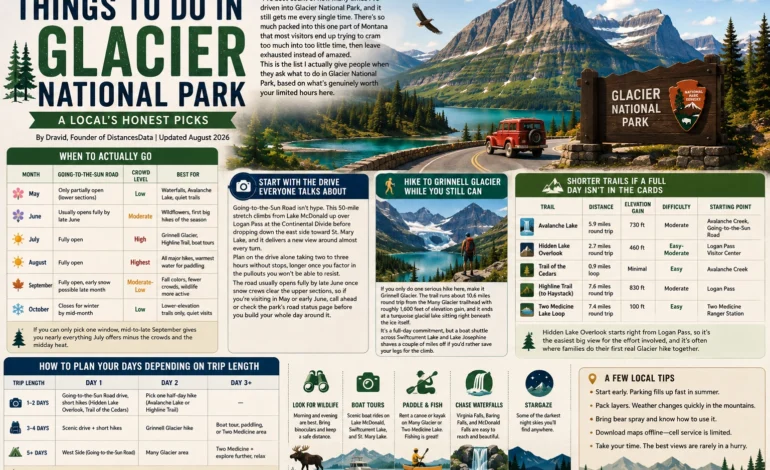
Nothing catches first-time visitors off guard here quite like the weather. I’ve stood at Logan Pass in a t-shirt at noon and watched clouds roll in with genuine snow flurries by 3 p.m., same day, same trip. The weather in Glacier National Park changes fast because elevation does most of the driving, and understanding that pattern matters more than memorizing any single forecast.
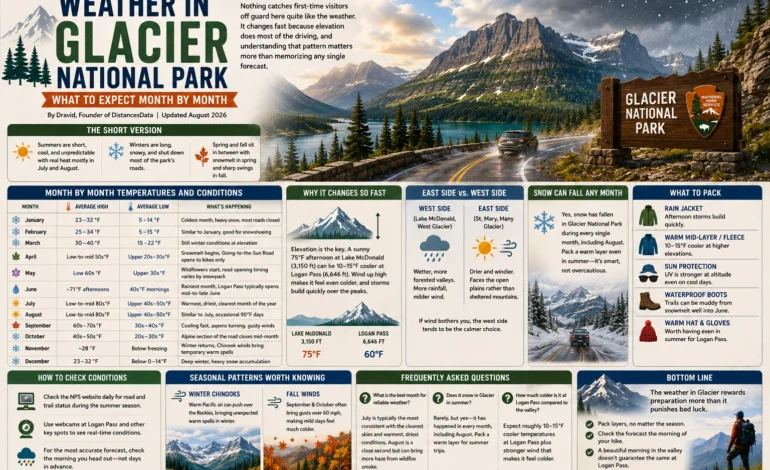
Summers run short, cool, and unpredictable by most standards, with real heat mostly limited to July and August. Winters are long, snowy, and shut down most of the park’s roads entirely. Spring and fall sit somewhere in between, with spring dominated by snowmelt and fall bringing sharp temperature swings and strong wind.
Month by Month Temperatures and Conditions
Here’s how the year actually breaks down, based on typical patterns rather than any single year’s numbers.
| Month | Average High | Average Low | What’s Happening |
|---|---|---|---|
| January | 23–32°F | 5–14°F | Coldest month, heavy snow, most roads closed |
| February | 25–34°F | 5–15°F | Similar to January, good for snowshoeing |
| March | 30–40°F | 15–22°F | Still winter conditions at elevation |
| April | Low-to-mid 50s°F | Upper 20s–30s°F | Snowmelt begins, Going-to-the-Sun Road opens to bikes only |
| May | Low 60s°F | Upper 30s°F | Wildflowers start, road opening timing varies by snowpack |
| June | ~71°F afternoons | 40s°F mornings | Rainiest month, Logan Pass typically opens mid-to-late June |
| July | Low-to-mid 80s°F | Upper 40s–50s°F | Warmest, driest, clearest month of the year |
| August | Low-to-mid 80s°F | Upper 40s–50s°F | Similar to July, occasional 90°F days |
| September | 60s–70s°F | 30s–40s°F | Cooling fast, aspens turning, gusty winds |
| October | 40s–50s°F | 20s–30s°F | Alpine section of the road closes mid-month |
| November | ~28°F | Below freezing | Winter returns, Chinook winds bring temporary warm spells |
| December | 23–32°F | Below 0–14°F | Deep winter, heavy snow accumulation |
Why It Changes So Fast
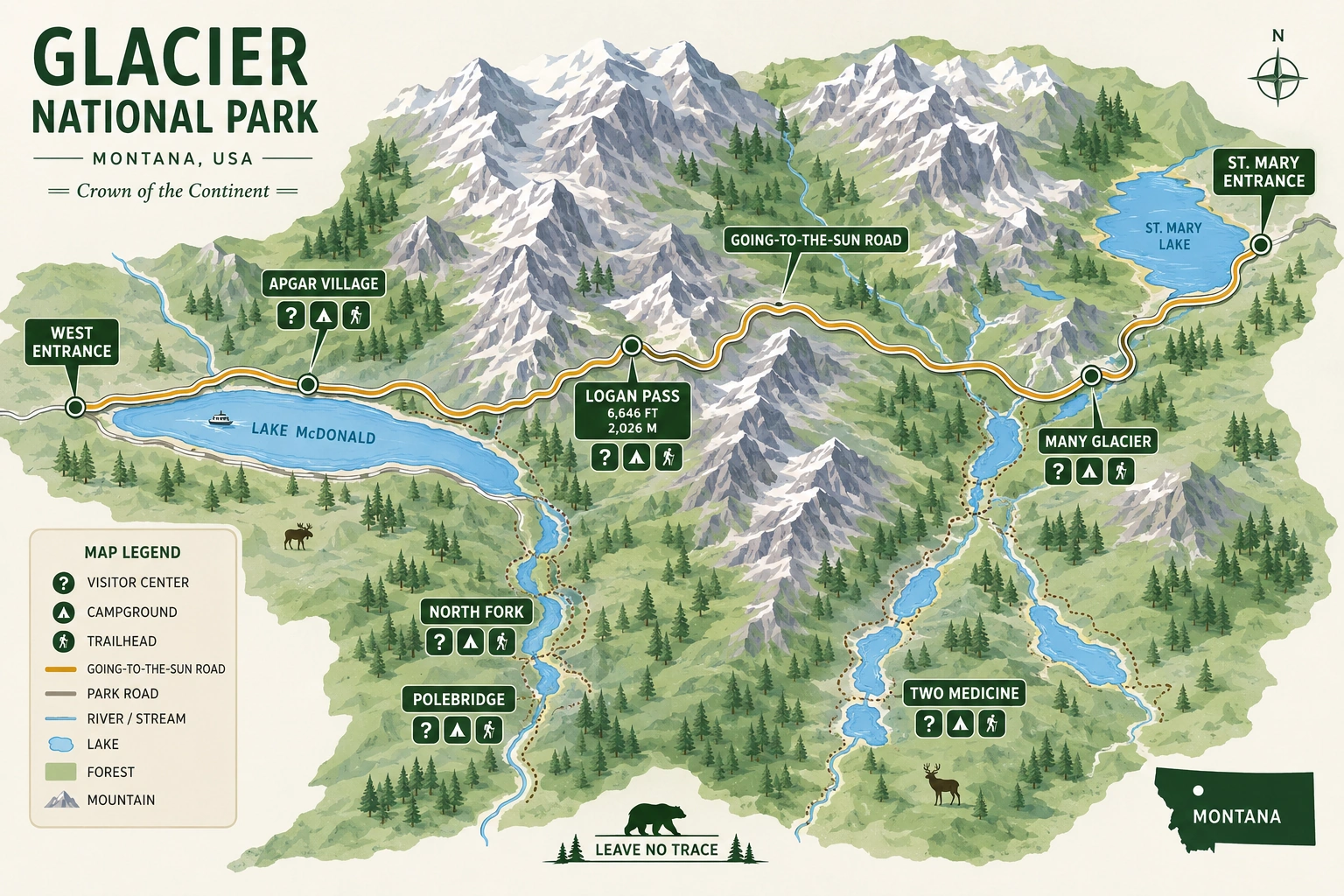
The short answer is elevation. A sunny, 75°F afternoon at Lake McDonald, sitting around 3,150 feet, can feel completely different from the same moment at Logan Pass, which sits above 6,600 feet. Temperatures typically drop 10 to 15 degrees as you climb toward the pass, and wind exposure up there makes it feel even colder than the thermometer suggests. Storms also build quickly over the peaks, so a clear morning is genuinely no guarantee of a clear afternoon, especially in July and August when afternoon thunderstorms are common.
East Side vs West Side Differences
The two halves of the park don’t share identical weather, which surprises people who assume a single forecast covers the whole place. The west side, around Lake McDonald and West Glacier, sits in a wetter, more forested valley and generally sees more rainfall and milder wind. The east side, around St. Mary and Many Glacier, is drier and considerably windier, since it faces the open plains rather than being sheltered by the mountains. If you’re deciding where to base yourself and wind bothers you, the west side tends to be the calmer choice.
Snow Can Fall Any Month
This surprises people every year, but it’s true: snow has fallen in Glacier National Park during every single month, including August. It’s rare and usually brief in summer, but it happens often enough that packing at least one warm layer, even for a July trip, isn’t overly cautious, it’s just realistic given how this park behaves.
What to Pack Based on the Weather
Layering matters more here than almost anywhere else, since a single day can swing through several very different conditions.
| Item | Why It’s Worth Packing |
|---|---|
| Rain jacket | Afternoon storms build quickly, even on clear summer mornings |
| Warm mid-layer or fleece | Temperatures at higher elevations run 10–15°F cooler than the valley |
| Sun protection | UV exposure is stronger at altitude, even on cool or cloudy days |
| Sturdy waterproof boots | Trails can be muddy from snowmelt well into June |
| Warm hat and gloves | Worth having even in summer if you’re heading up to Logan Pass |
How to Check Conditions Before You Go
Given how much elevation affects the weather in Glacier National Park, checking a single forecast a week out isn’t very useful. The National Park Service updates road and trail status daily on its official website during the summer season, and this is a better source than a general weather app for understanding whether Logan Pass is actually passable or whether a trail is still snowed in. Local webcams positioned at Logan Pass and a few other key spots also let you see real-time conditions before committing to a drive up the pass, which has saved me from a wasted trip more than once. For the most accurate short-term forecast, check the morning you’re heading out rather than relying on anything predicted more than two or three days ahead.
Seasonal Patterns Worth Knowing
Winter here isn’t as brutal as the raw temperature numbers might suggest, mostly thanks to Chinook winds that occasionally push warm Pacific air over the Rockies and briefly spike temperatures well above what you’d expect in December or January. Fall brings the opposite kind of surprise: September and October often bring wind gusts over 60 miles per hour, which can make an otherwise mild day feel far colder on an exposed ridge or overlook.
Frequently Asked Questions
July is typically the most consistent, with the clearest skies and warmest, driest conditions of the year. August runs a close second, though it can bring more haze from regional wildfire smoke in some years.
Rarely, but yes, it has happened in every month of the year, including August. It’s uncommon enough that you shouldn’t expect it, but common enough that packing a warm layer for a summer trip is a smart move.
Expect roughly 10 to 15°F cooler temperatures at Logan Pass compared to Lake McDonald or West Glacier, plus stronger wind exposure that can make it feel colder still.