Things to Do in Glacier National Park: A Local’s Honest Picks

I’ve lost count of how many times I’ve driven into Glacier National Park, and it still gets me every single time. There’s so much packed into this one part of Montana that most visitors end up trying to cram too much into too little time, then leave exhausted instead of amazed. This is the list I actually give people when they ask what to do in Glacier National Park, based on what’s genuinely worth your limited hours here.
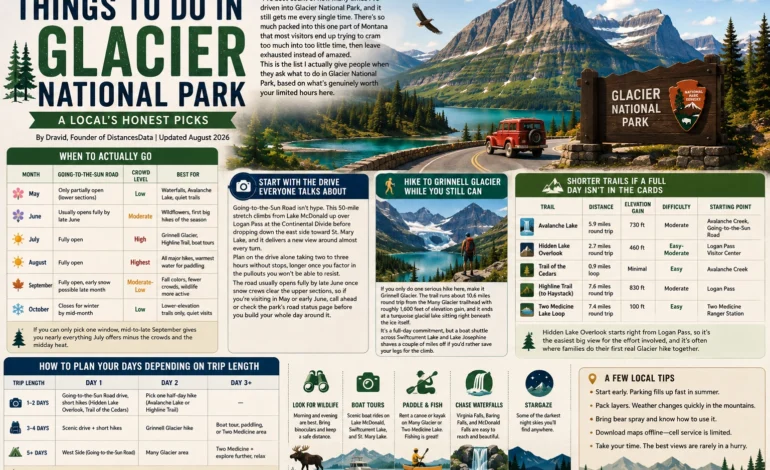
Timing changes almost everything about which things to do in Glacier National Park are even possible on a given day, since a lot of the road and trail access depends entirely on snowmelt.
| Month | Going-to-the-Sun Road | Crowd Level | Best For |
|---|---|---|---|
| May | Only partially open (lower sections) | Low | Waterfalls, Avalanche Lake, quiet trails |
| June | Usually opens fully by late June | Moderate | Wildflowers, first big hikes of the season |
| July | Fully open | High | Grinnell Glacier, Highline Trail, boat tours |
| August | Fully open | Highest | All major hikes, warmest water for paddling |
| September | Fully open, early snow possible late month | Moderate-Low | Fall colors, fewer crowds, wildlife more active |
| October | Closes for winter by mid-month | Low | Lower-elevation trails only, quiet visits |
If you can only pick one window, mid-to-late September gives you nearly everything July offers minus the crowds and the midday heat.
Start With the Drive Everyone Talks About
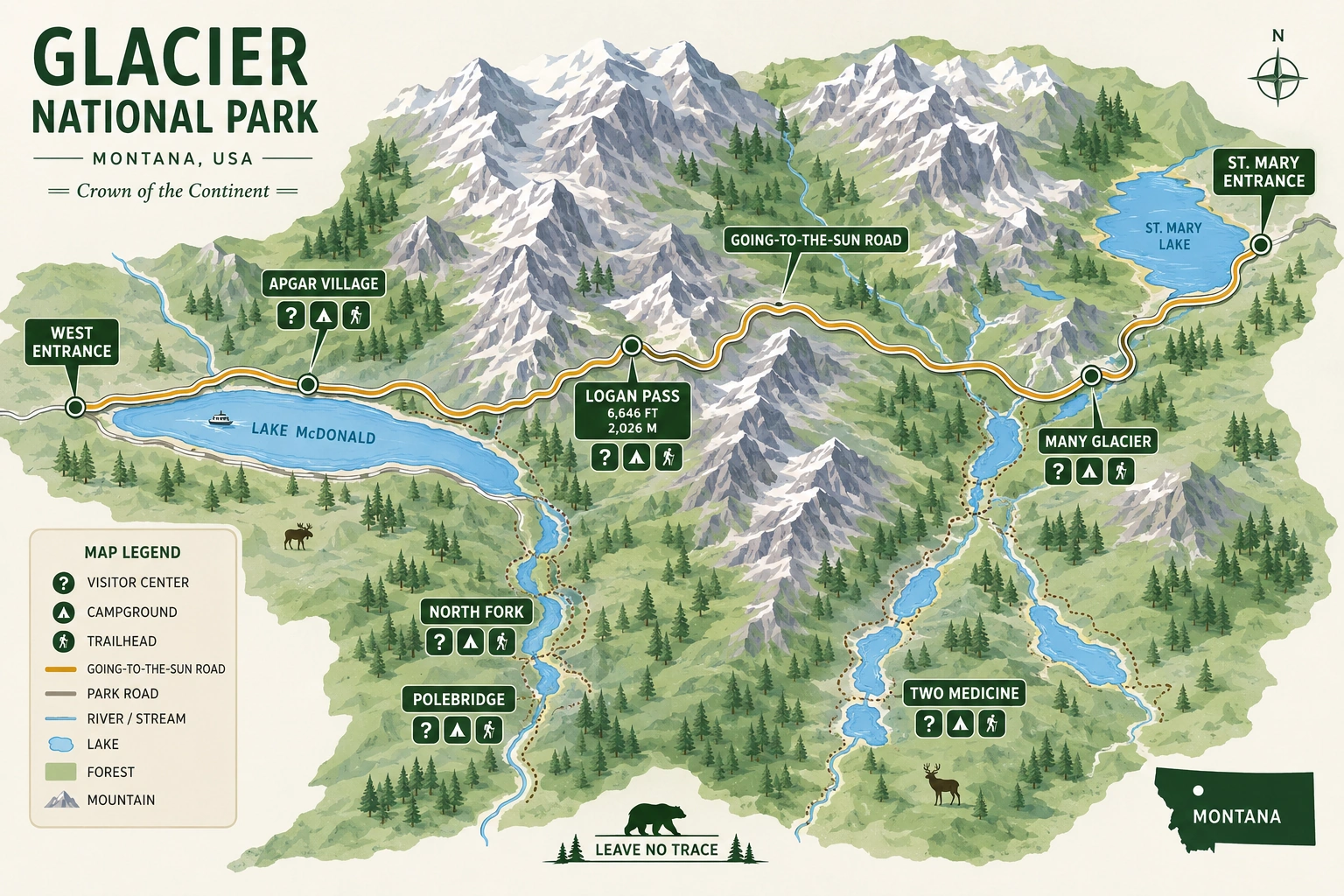
Going-to-the-Sun Road isn’t hype. This 50-mile stretch climbs from Lake McDonald up over Logan Pass at the Continental Divide before dropping down the east side toward St. Mary Lake, and it delivers a new view around almost every turn. Plan on the drive alone taking two to three hours without stops, longer once you factor in the pullouts you won’t be able to resist. The road usually opens fully by late June once snow crews clear the upper sections, so if you’re visiting in May or early June, call ahead or check the park’s road status page before you build your whole day around it.
Hike to Grinnell Glacier While You Still Can
If you only do one serious hike here, make it Grinnell Glacier. The trail runs about 10.6 miles round trip from the Many Glacier trailhead with roughly 1,600 feet of elevation gain, and it ends at a turquoise glacial lake sitting right beneath the ice itself. It’s a full-day commitment, but a boat shuttle across Swiftcurrent Lake and Lake Josephine shaves a couple of miles off if you’d rather save your legs for the climb.
Shorter Trails If a Full Day Isn’t in the Cards
Not every trip allows for an all-day hike, and that’s fine. A few shorter trails still deliver real payoff without eating your whole afternoon.
| Trail | Distance | Elevation Gain | Difficulty | Starting Point |
|---|---|---|---|---|
| Avalanche Lake | 5.9 miles round trip | 730 feet | Moderate | Avalanche Creek, Going-to-the-Sun Road |
| Hidden Lake Overlook | 2.7 miles round trip | 460 feet | Easy-Moderate | Logan Pass Visitor Center |
| Trail of the Cedars | 0.9 miles loop | Minimal | Easy | Avalanche Creek |
| Highline Trail (to Haystack) | 7.6 miles round trip | 830 feet | Moderate | Logan Pass |
| Two Medicine Lake Loop | 7.4 miles round trip | 100 feet | Easy | Two Medicine Ranger Station |
Hidden Lake Overlook starts right from Logan Pass, so it’s the easiest big view for the effort involved, and it’s often where families do their first real Glacier hike together.
How to Plan Your Days Depending on Trip Length
People always ask what to do in Glacier National Park when time is limited, so here’s how I’d actually split the days depending on how long you have.
| Trip Length | Day 1 | Day 2 | Day 3+ |
|---|---|---|---|
| 1 Day | Drive Going-to-the-Sun Road, hike Hidden Lake Overlook, sunset at Lake McDonald | — | — |
| 2 Days | Going-to-the-Sun Road + Hidden Lake Overlook | Grinnell Glacier hike from Many Glacier | — |
| 3 Days | Going-to-the-Sun Road + Avalanche Lake | Grinnell Glacier | Two Medicine or a Red Bus Tour + Lake McDonald boat ride |
| 5+ Days | Same as above, plus | Highline Trail full traverse | Rafting on the Flathead River, exploring the quieter North Fork area |
One day genuinely works if that’s all you have, but three days is the sweet spot where you actually feel like you’ve seen the park rather than rushed through it.
Let Someone Else Handle the Driving
If the mountain roads make you nervous, or you’d just rather look at the scenery than watch the road, book a Red Bus Tour. These vintage roll-top buses, known locally as jammers, have been running through the park since the 1930s, and the drivers double as guides who know the history, the geology, and usually a decent joke or two. Seats fill up fast in summer, so book a few weeks ahead if you can.
Get Out on the Water
Glacier’s lakes are as much a part of the experience as its trails. Lake McDonald offers calm paddling and a red boat tour that’s easy to fit into a half day, while St. Mary Lake on the east side has some of the most photographed views in the entire park thanks to Wild Goose Island sitting in the middle of the water. If you’re up for something more active, guided rafting trips on the Middle Fork of the Flathead River run right along the park’s southern boundary.
Wildlife You Might Actually Spot
Glacier is grizzly and wolf country, and while sightings are never guaranteed, certain spots improve your odds considerably.
| Animal | Best Areas to Look | Best Time of Day |
|---|---|---|
| Grizzly Bear | Many Glacier, Logan Pass slopes | Early morning, dusk |
| Mountain Goat | Hidden Lake Trail, Logan Pass | Midday |
| Bighorn Sheep | Logan Pass, Highline Trail | Morning |
| Moose | Fishercap Lake, Bowman Lake | Early morning, evening |
| Black Bear | Lake McDonald area, forested trails | Dawn and dusk |
Carry bear spray on any hike beyond a short paved path, know how to use it before you head out, and keep a respectful distance no matter how calm an animal looks.
What’s Different About Visiting in 2026
A few things changed this year that are worth knowing before you go. Vehicle reservations, which were required for several summers on the Going-to-the-Sun corridor, are not in effect for 2026. In their place, the park introduced a three-hour parking limit at Logan Pass along with a new ticketed shuttle specifically for hikers heading out on the Highline Trail. If Logan Pass parking is full when you arrive, that shuttle becomes your backup plan rather than an inconvenience.
The standard entrance fee runs $35 per vehicle, or $25 per vehicle from November through April, and it covers seven days. If you’re planning to visit more than one national park this year, the America the Beautiful annual pass at $80 usually pays for itself after two or three park visits.
| Pass Type | Cost | Valid For |
|---|---|---|
| Vehicle Pass (May–Oct) | $35 | 7 days |
| Vehicle Pass (Nov–Apr) | $25 | 7 days |
| America the Beautiful Annual Pass | $80 | 12 months, all federal lands |
What to Actually Pack
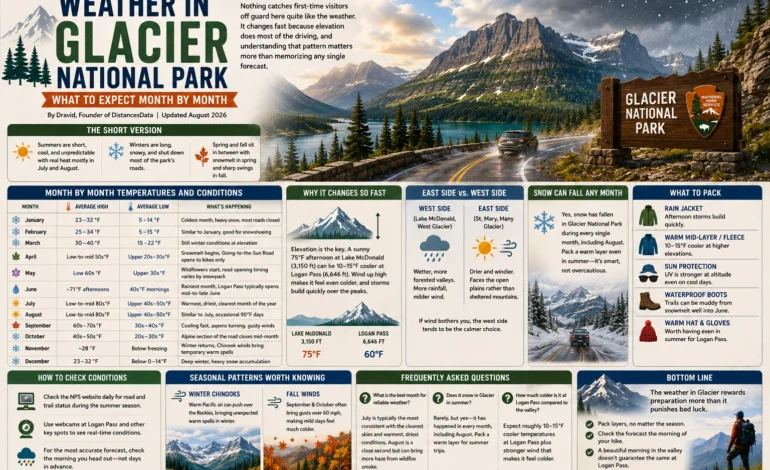
A surprising number of trip mishaps here come down to people underestimating how quickly weather turns at elevation. Layers matter more than any single piece of gear.
| Item | Why You Need It |
|---|---|
| Bear spray | Required common sense on any trail past a short paved loop |
| Layered clothing | Temperatures at Logan Pass can be 20°F cooler than the valley floor |
| Offline maps or a paper map | Cell service is nearly nonexistent inside the park |
| Refillable water bottle | No reliable cell signal to look up the nearest store; carry more than you think you need |
| Sturdy hiking shoes | Trails like Grinnell Glacier and Highline have loose rock sections |
| Rain jacket | Afternoon storms build quickly in summer, even on clear mornings |
A Few Honest Tips
Start early, always. Parking lots at Logan Pass and the popular east-side trailheads fill by mid-morning during peak summer weeks, and there’s no guarantee of a spot opening back up before afternoon. Cell service inside the park is close to nonexistent, so download offline maps and let someone outside the park know your hiking plan for the day. And if crowds bother you, the east side around Two Medicine and St. Mary sees noticeably fewer visitors than the west side, even during the busiest weeks of July and August.
Frequently Asked Questions
People ask me the same handful of questions every summer about things to do in Glacier National Park, so here are the honest answers.
Three full days covers the highlights comfortably: one for Going-to-the-Sun Road, one for a longer hike like Grinnell Glacier, and one for Many Glacier or the east side. Two days works if you’re willing to move quickly and skip one major hike.
Day hikes on established trails don’t need a permit, just your park entrance pass. Overnight backcountry camping does require a separate permit, which should be booked well ahead for popular sites.
Drive Going-to-the-Sun Road start to finish, stop at Logan Pass for the Hidden Lake Overlook trail, and end the day at Lake McDonald for sunset. It’s the fastest way to see why people fall in love with this park.