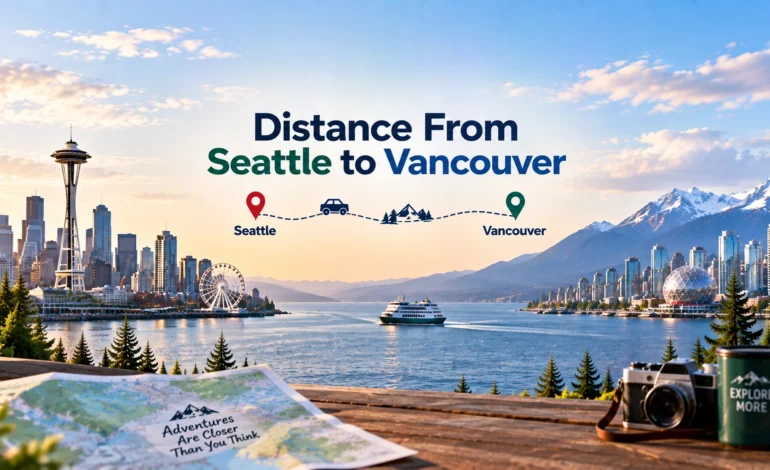
Distance From Seattle to Vancouver: The Full Breakdown

Seattle to Vancouver is a genuinely easy drive, right up until you hit the border, and then it can go either way depending on how busy the crossing is that day. Here’s what the actual numbers look like, plus what to expect once you’re at the line.
Short version before the details.
| Detail | Information |
|---|---|
| Driving Distance | Around 143 miles (about 230 km) |
| Driving Time | Roughly 2.5 to 3 hours, not counting the border |
| Main Route | Interstate 5 (I-5) north to the border, then Highway 99 into Vancouver |
| Border Crossings | Peace Arch or Pacific Highway (Blaine) are the main ones |
| Recommended Trip Length | A day trip, or 2 to 3 days if you’re turning it into a proper getaway |
So What’s the Distance From Seattle to Vancouver?
Around 143 miles if you’re taking I-5 the whole way, though you’ll see numbers anywhere from 140 to 145 depending on the source and exactly where in each city you start. Metric-wise, that’s roughly 230 km. Straight-line distance, if you’re curious, is a bit shorter at around 142 miles, since the actual road obviously isn’t a perfectly straight shot. Either way, the distance from Seattle to Vancouver is genuinely short — comfortably doable as a half-day trip if the border cooperates.
How Long Does It Actually Take?
Under normal traffic and a quick border crossing, the distance from Seattle to Vancouver takes about 2.5 to 3 hours total. That’s the tricky part, though — the driving itself is predictable, but the border is not. On a good day, crossing takes 10 to 25 minutes. On a bad one, especially summer weekends or holidays, it can stretch to 45 minutes or well beyond. Worth checking current wait times before you leave, since they genuinely swing the total trip length more than the drive itself does.
| Factor | Typical Impact |
|---|---|
| I-5 Driving Time | 2.5 hours under normal conditions |
| Border Crossing (Light Traffic) | 10 to 25 minutes |
| Border Crossing (Peak Times) | 45 minutes or more |
| Total Trip Estimate | 2.5 to 3.5+ hours depending on the border |
The Route Itself
I-5 north out of Seattle is the obvious choice — direct, well maintained, and it gets you to the border efficiently. Once you cross, the road becomes Highway 99, which carries you the rest of the way into downtown Vancouver. Along the way you’ll pass through Bellingham, one of the last decent-sized US towns before the border, which makes it a sensible spot to fill up on gas, since options get thinner the closer you get to the crossing.
| Route Segment | What to Expect |
|---|---|
| Seattle to Bellingham | Straightforward I-5 driving, last major US city before the border |
| Bellingham to the Border | Shorter stretch, fewer services, worth fueling up beforehand |
| Border Crossing | Peace Arch or Blaine, wait time varies significantly |
| Border to Vancouver | Highway 99 into the city, generally smooth |
What You Need at the Border
Since this involves crossing into Canada, documentation matters more than it does on a purely domestic drive. A valid passport works for everyone, though a NEXUS card speeds things up noticeably if you cross this particular border often, since it lets you use dedicated lanes that skip most of the regular line entirely. Standard driver’s license, registration, and insurance are expected too, and it’s worth having a rough idea of your travel plans ready in case an officer asks. None of this is complicated, just easy to forget if you’re used to purely domestic road trips.
| Document | Why You Need It |
|---|---|
| Valid Passport | Required for all travelers crossing this border |
| NEXUS Card | Optional, but speeds up frequent crossings noticeably |
| Driver’s License | Standard requirement for the vehicle’s driver |
| Registration and Insurance | Expected to be on hand if requested |
Good Places to Stop Along the Way
Given how short this drive is, plenty of people skip stopping altogether, but a couple of towns along the route are genuinely worth the detour. Bellingham is the obvious one — good food, a walkable downtown, and it’s right before the border anyway. La Conner, a little further south, is a smaller, quieter option if you’d rather see the Skagit Valley than another highway town, and it’s especially worth it during tulip season in spring.
| Stop | Why It’s Worth It |
|---|---|
| Bellingham | Last major US stop, good food, easy gas access |
| La Conner | Quiet detour through Skagit Valley, great in tulip season |
| White Rock, BC | A nice first stop once you’re across the border |
A Few Things to Know Once You’re in Vancouver
A handful of practical details catch American drivers off guard once they’re actually in the city. Canada uses the Canadian dollar, not USD, so it’s worth having a card that doesn’t charge foreign transaction fees or grabbing some local cash beforehand, since not every small business takes US dollars at a fair rate. Gas is sold by the litre rather than the gallon in Canada, and prices often look higher at first glance until you do the conversion — it’s not necessarily more expensive, just measured differently. Parking in downtown Vancouver can also run pricier than most US drivers expect, so it’s worth checking rates before you commit to street parking near busy areas like Gastown or the West End. Phone plans are another thing to check ahead of time, since US carriers sometimes charge international roaming rates the moment you cross, even for a short trip.
| Practical Detail | What to Know |
|---|---|
| Currency | Canadian dollar, not USD — check card fees or carry some local cash |
| Fuel | Sold by the litre, prices can look higher until converted |
| Parking | Downtown Vancouver rates often run higher than expected |
| Phone Service | Check for international roaming charges before crossing |
Comparing This to Other Pacific Northwest Drives
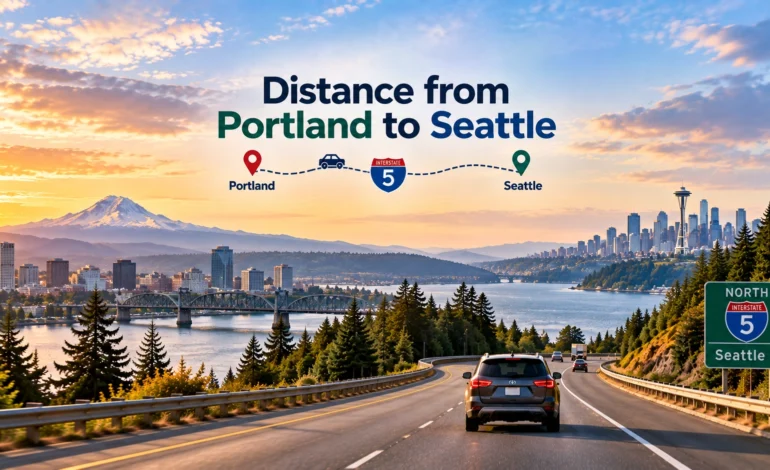
It helps to see the distance from Seattle to Vancouver next to a few other regional routes people commonly ask about. Compared to a longer haul down to San Diego, or even the shorter Portland-Seattle run, this one sits right in the middle — short enough for a day trip, but with the added wrinkle of an international border.
| Route | Approximate Distance | Typical Travel Time |
|---|---|---|
| Seattle to Vancouver | 143 miles | 2.5 to 3.5 hours |
| Seattle to Portland | 174 miles | 2.5 to 3 hours |
| Vancouver to Whistler | Around 75 miles | 1.5 to 2 hours |
| Seattle to Spokane | Around 280 miles | 4.5 hours |
Alternatives to Driving
Driving isn’t the only way to cover this distance. Amtrak Cascades runs between the two cities and takes around 4 hours, which is longer than driving but skips the stress of the border line entirely — customs happens on the train instead. Buses run this route too, usually landing somewhere between 3 and 5 hours depending on the service and border conditions. Flying is fast in the air, under an hour, but by the time you add airport time on both ends, it rarely beats driving or the train for a distance this short.
| Option | Rough Travel Time | Best For |
|---|---|---|
| Driving (I-5) | 2.5 to 3.5 hours | Flexibility, stopping along the way |
| Amtrak Cascades | Around 4 hours | Skipping the border line stress |
| Bus | 3 to 5 hours | Budget travel |
| Flying | Under 1 hour in the air, 3+ hours total | Rarely worth it for this distance |
When to Make the Drive
Spring tends to be one of the nicer times for this trip, partly for the weather and partly because the Skagit Valley Tulip Festival happens in April if your route runs through La Conner. Early fall is another solid window. Summer weekends bring the heaviest border traffic of the year, so if you can avoid those, do — the drive itself barely changes season to season, but the crossing time absolutely does.