Calgary to Glacier National Park: Distance, Border Crossing, and Route Guide

A drive from Calgary to Glacier National Park is one of the more unique road trips you can do in this part of North America, mostly because it involves an actual international border crossing along the way, complete with its own set of rules and seasonal timing to plan around. That adds a layer of planning most domestic road trips don’t require, but it also means you get to pass through Waterton Lakes National Park on the Canadian side before ever reaching Glacier itself, which makes the whole trip feel like two parks for the price of one drive.
How Far Is It, Really
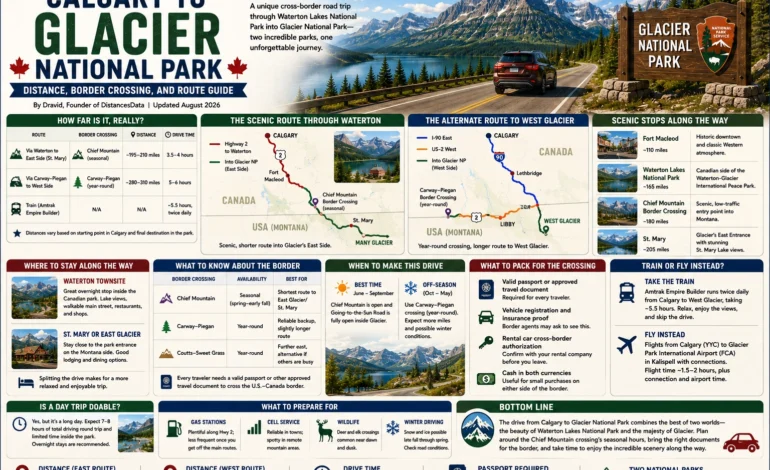
The distance from Calgary to Glacier National Park depends heavily on which entrance and which border crossing you use, and the numbers genuinely diverge.
| Route | Border Crossing | Distance | Drive Time |
|---|---|---|---|
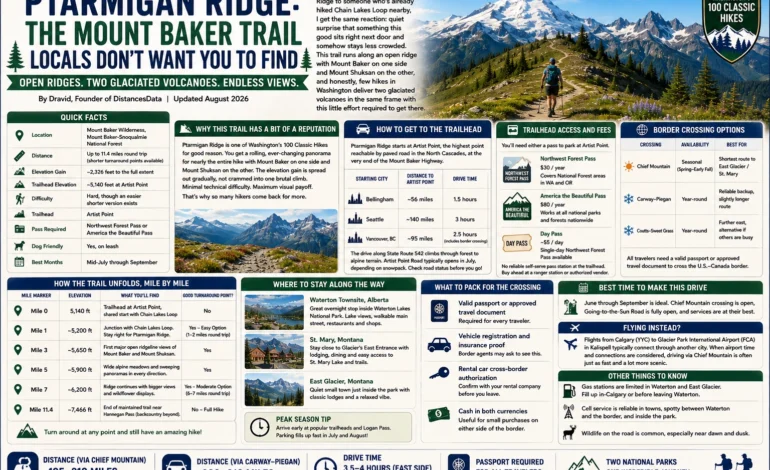
| Via Waterton to East Side (St. Mary) | Chief Mountain (seasonal) | ~195–210 miles | 3.5–4 hours |
| Via Carway–Piegan to West Side | Carway–Piegan (year-round) | ~280–310 miles | 5–6 hours |
The shorter drive from Calgary to Glacier National Park uses the Chief Mountain crossing and drops you almost directly onto the park’s east side, while the longer route heads further east to a year-round crossing before circling around toward West Glacier.
The Scenic Route Through Waterton
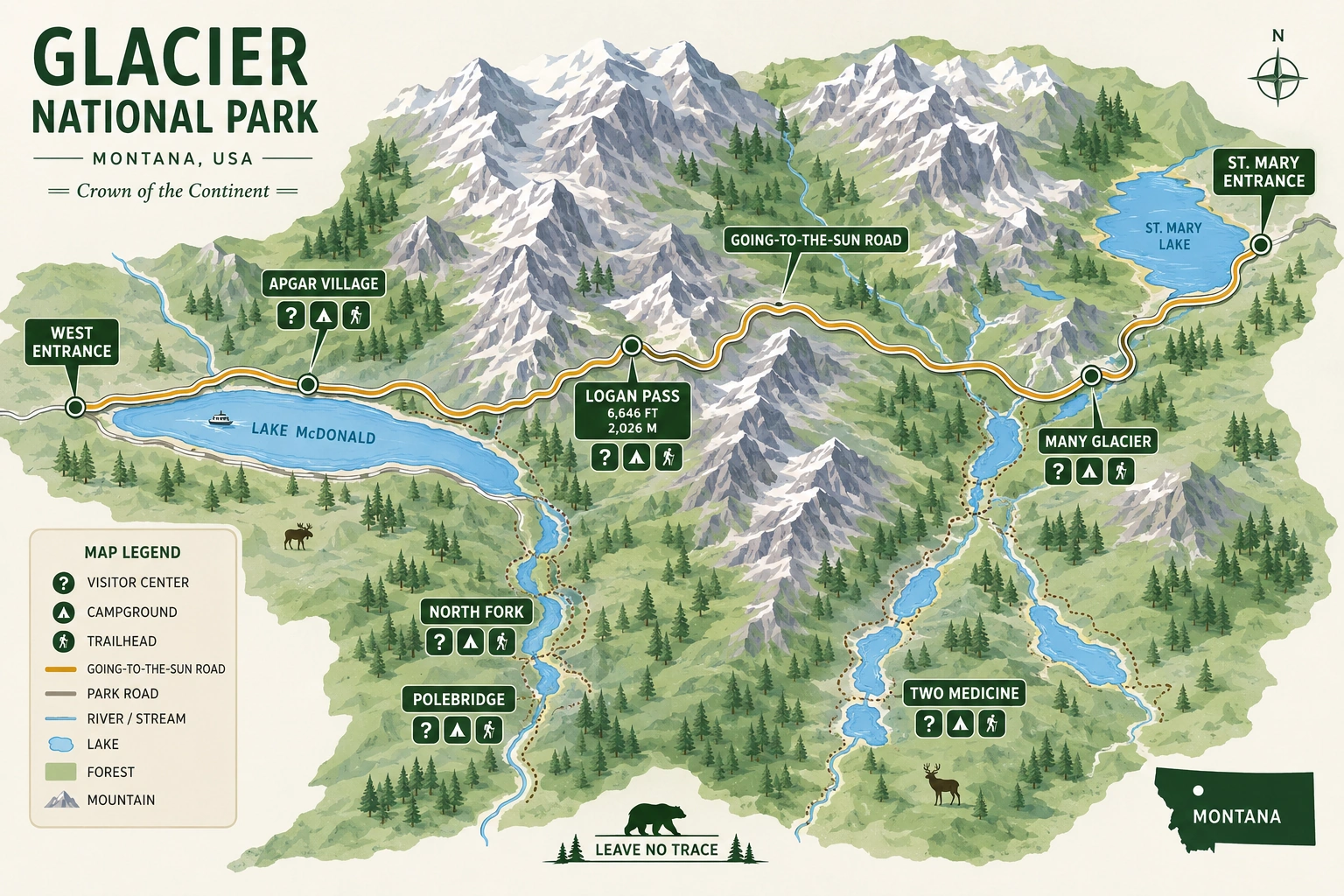
The most popular way to make this trip runs south from Calgary on Highway 2, through Fort Macleod, and into Waterton Lakes National Park before crossing into the United States. This route is worth doing slowly rather than treating it as a straight transit day, since Waterton itself is a legitimate destination, not just a pass-through town on the way to somewhere else. From Waterton, the Chief Mountain border crossing carries you directly into Glacier’s east side, putting you close to St. Mary and Many Glacier without much extra driving once you’re across.
| Stop | Distance from Calgary | Why It’s Worth a Look |
|---|---|---|
| Fort Macleod | ~110 miles | Historic downtown, classic Western atmosphere |
| Waterton Lakes National Park | ~165 miles | Canadian side of the Waterton-Glacier peace park, alpine lakes |
| Chief Mountain Border Crossing | ~180 miles | Scenic, low-traffic entry point into Montana |
| St. Mary | ~205 miles | Glacier’s east entrance, St. Mary Lake views |
Where to Stay Along the Way
If you’d rather not push straight through in one day, Waterton townsite makes a genuinely good overnight stop, sitting right inside the Canadian park with lake views and a small, walkable main street full of restaurants and shops. Staying here also means you’re crossing the border fresh the next morning rather than tackling both a long drive and international paperwork on the same day. On the Montana side, St. Mary or East Glacier both work well if you’d rather split the trip with a night close to the park entrance instead.
What to Know About the Border Crossing
This is the part of the drive from Calgary to Glacier National Park that trips people up if they haven’t done it before. Chief Mountain is a seasonal port of entry, typically open from spring through early fall, so if you’re traveling outside that window, you’ll need to use the Carway–Piegan crossing instead, which runs year-round but adds real distance and time to reach West Glacier. Every traveler needs a valid passport or another approved travel document, and if you’re driving a rental car, you’ll want to confirm ahead of time that it’s cleared for cross-border travel, since not every rental agreement allows it by default.
| Border Crossing | Availability | Best For |
|---|---|---|
| Chief Mountain | Seasonal (spring–early fall) | Shortest route to East Glacier/St. Mary |
| Carway–Piegan | Year-round | Reliable backup, slightly longer route |
| Coutts–Sweet Grass | Year-round | Further east, alternative if others are busy |
When to Make This Drive
Summer is really the only practical window if you want to use the shorter, more scenic route through Chief Mountain, since that crossing closes for the colder months. June through September lines up well with when Going-to-the-Sun Road inside Glacier is fully open too, so the timing works out conveniently if you’re planning the trip from Calgary to Glacier National Park around peak summer anyway. Outside that window, the Carway–Piegan crossing keeps the trip possible year-round, just with more miles added to reach the west side of the park.
Flying Instead of Driving
If a border-crossing road trip isn’t appealing, flying is a reasonable alternative. Calgary International Airport connects to Glacier Park International Airport in Kalispell through a mix of routes, though typically with a connection rather than a direct flight. Once you factor in airport time and the connection, flying doesn’t necessarily save much time over the direct drive from Calgary to Glacier National Park through Chief Mountain, so most travelers who’ve made this trip tell me driving ends up being the more straightforward choice unless you specifically want to avoid the border crossing paperwork.
What to Pack for the Crossing
A few extra items matter on this particular drive that wouldn’t come up on a purely domestic road trip.
| Item | Why It Matters |
|---|---|
| Valid passport or approved travel document | Required for every traveler crossing the border |
| Vehicle registration and insurance proof | Border agents may ask to see this |
| Rental car cross-border authorization | Confirm with your rental company before you leave |
| Cash in both currencies | Useful for small purchases on either side of the border |
Frequently Asked Questions
Around 3.5 to 4 hours via the Chief Mountain crossing to the east side, or 5 to 6 hours via Carway–Piegan if you’re heading to West Glacier or traveling outside the summer season.
Yes, every traveler needs a valid passport or another approved travel document to cross the U.S.–Canada border, regardless of which crossing you use.
No, it’s a seasonal crossing, generally open from spring through early fall. Outside that window, use the Carway–Piegan crossing instead, which operates year-round.