

The hardest part of a first flight is often not the flight. It is wondering whether you are standing in the right line, whether the bag is too heavy or what happens after security. Airports run through a predictable sequence, and once that sequence makes sense, most of the stress fades. These travel tips for first-time flyers take you through it in the same order you will experience it.
An airport becomes easier when you know the order in which each step happens. This table shows the basic journey from preparation at home to collecting your baggage after landing.
| Stage | What happens |
|---|---|
| Before travel | Check documents, terminal and baggage rules |
| Check-in | Receive a boarding pass and drop checked bags |
| Security | Bags and passengers are screened |
| Gate | Wait for the flight and listen for boarding groups |
| Aircraft | Store bags, sit down and follow crew instructions |
| Arrival | Follow signs to baggage claim or connections |
1. Check the Name on the Ticket
The passenger name should match the travel document. Review the route, date, departure airport and terminal as soon as the booking confirmation arrives. Large cities may have several airports, and terminals can change.
For an international flight, check passport validity, visa or authorisation rules and transit requirements. A connection may require documents even when you do not plan to leave the airport.
2. Read the Airline’s Baggage Rules
Airlines set different limits for checked bags, cabin bags and personal items. A ticket may include no checked luggage at all. Check both dimensions and weight because a bag that fits physically may still be too heavy.
Keep medicine, documents, valuables, batteries and one basic change of clothes in the cabin bag. Spare lithium batteries and power banks generally belong in hand baggage, subject to airline limits.
3. Complete Online Check-In
Many airlines open online check-in about 24 to 48 hours before departure. It can confirm the seat and provide a digital boarding pass. Some international routes still require a document check at the airport.
Save the pass offline or take a screenshot. A weak signal at the terminal should not stop you from opening it.
4. Arrive With Enough Time
A common starting point is about two hours before a domestic flight and three hours before an international flight. Busy holidays, unfamiliar airports and checked baggage may require more time.
Use the time printed by the airline rather than guessing. Boarding normally closes before the departure time shown on the ticket.
5. Know What Happens at Check-In
Find the airline’s desk or bag-drop area. Staff may check identification, weigh luggage and place a tag on each checked bag. Keep the baggage receipt until the bag is collected.
If travelling with cabin baggage only and all documents are approved, the digital boarding pass may allow you to go directly to security.
6. Prepare for Security
Follow local signs because procedures differ by country and airport. Liquids may need to be in small containers inside a clear bag. Laptops, tablets, belts or jackets may need to be placed separately.
Do not make jokes about weapons or prohibited items. Keep pockets empty, listen to officers and collect belongings calmly after screening.
7. Find the Gate Early
The boarding pass shows a gate, but gates can change. Check the airport screens after security and again before boarding. Walking to a distant gate may take 20 minutes or more.
Once the gate is confirmed, refill water where allowed, use the restroom and keep listening for announcements.
8. Understand Boarding Groups
Passengers normally board in groups based on cabin, status or seat position. Wait until the group printed on the boarding pass is called. Joining the queue early does not make the aircraft leave sooner.
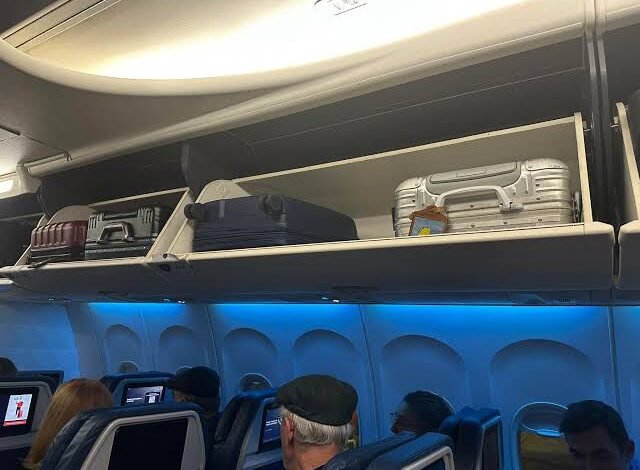
Have the boarding pass and identification ready. The larger cabin bag goes in the overhead bin; the personal item goes under the seat unless crew instructions say otherwise.
9. Expect Normal Aircraft Sounds
Take-off is loud and the push into the seat can feel stronger than expected. A few minutes later, the engine sound may change and the wings may flex slightly. Those sensations can be unsettling on a first flight, but they are normal parts of the aircraft climbing and adjusting power.
Swallow, yawn or chew gum during climb and descent if your ears feel blocked. Keep the seat belt fastened whenever seated, even if the sign is off.
10. Plan Connections Carefully
Follow signs marked “Connections” or “Transfers.” Depending on the airport and route, you may need security screening, immigration or baggage collection before the next flight.
Check the next gate on airport screens. If the first flight is late, speak to airline staff rather than choosing a new ticket independently.
11. Handle Arrival in the Right Order
On an international trip, immigration usually comes before baggage claim and customs. On a domestic trip, follow signs directly to baggage claim unless connecting.
Compare the baggage tag or name before leaving. If a checked bag does not arrive, report it at the airline’s baggage desk before exiting the secure area.
Useful Cabin-Bag Checklist
- Identification and travel documents
- Phone, charging cable and approved power bank
- Prescription medicine in original packaging
- Headphones and simple entertainment
- Empty water bottle for use after security
- Light layer for a cool cabin
- Essential toiletries within security limits
- Address and contact details for the first stay
If a Flight Is Delayed or Cancelled
Read the airline message carefully and check its app before joining a long service-desk line. The app may already offer a replacement flight. Keep receipts for meals, transport or a hotel because reimbursement rights depend on the country, airline and reason for disruption.
Do not accept a refund until you understand whether it will end the airline’s duty to transport you. If the trip contains separate tickets, contact the next airline quickly because it may treat a missed flight as a no-show. Travel insurance can help, but only within the policy’s covered reasons and limits.
What Flight Distance Usually Feels Like
Distance does not translate perfectly into time because routes, wind and airport congestion vary. Still, these broad ranges help a first-time flyer understand what to expect.
| Approx. flight distance | Typical category | Common airborne time | What to plan for |
|---|---|---|---|
| Under 800 miles / 1,300 km | Short haul | About 1–2.5 hours | Light snack, limited time to settle in |
| 800–2,200 miles / 1,300–3,500 km | Medium haul | About 2.5–5 hours | Meal timing and entertainment matter more |
| 2,200–5,000 miles / 3,500–8,000 km | Long haul | About 5–10 hours | Sleep, movement and hydration need planning |
| Over 5,000 miles / 8,000 km | Very long haul | Often 10+ hours | Jet lag and a slow first day are likely |
Ticket duration also includes taxiing and may differ from time in the air. A connection can make a short geographic journey take most of the day, so compare the full itinerary rather than distance alone.
Frequently Asked Questions
Usually yes in airplane mode. Follow the airline’s rules for Wi-Fi, calls and larger electronic devices.
Tell a crew member quietly after boarding. Slow breathing, familiar music and a seat away from the window may help. Seek professional support if anxiety is severe.
Many solid foods are allowed through security, but liquids and international customs rules may restrict some items. Check the departure and destination rules.
Go to the airline’s transfer or service desk. When the flights are on one ticket, the airline may rebook you according to its rules and the cause of the delay.