
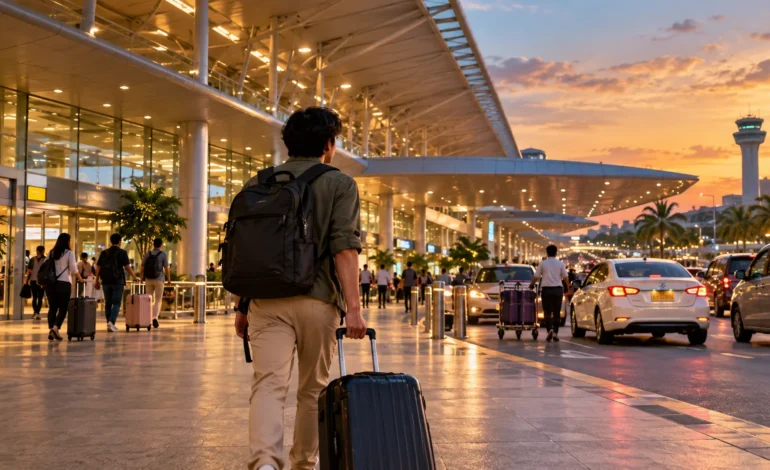

Ho Chi Minh City Airport usually means Tan Son Nhat International Airport, with the airport code SGN. It is the main air gateway for Vietnam’s southern capital and sits close to the central districts. That location is convenient, but traffic, separate terminals, and busy arrival halls can make a first visit feel confusing.
This guide explains Ho Chi Minh City Airport in simple steps. You will learn which terminal to use, how to change terminals, how to reach District 1, how much time to allow, and what to check before you leave your hotel. Always confirm the terminal on your airline booking because domestic flights may use T1 or T3.
Quick Facts About Ho Chi Minh City Airport
The quickest way to understand Ho Chi Minh City Airport is to remember the three-terminal layout. T2 is for international flights, while T1 and T3 handle domestic services. The terminals are part of the same airport but do not work like one compact building.
| Item | What to know |
| Airport name | Tan Son Nhat International Airport |
| IATA code | SGN |
| Terminal 1 | Domestic flights; some airlines and routes remain here |
| Terminal 2 | International arrivals and departures |
| Terminal 3 | Newer domestic terminal; check your airline before going |
| City distance | About 10 km from the city centre, depending on the route |
Ho Chi Minh City Airport Terminal Guide
Terminal choice matters more than most first-time visitors expect. Before leaving for Ho Chi Minh City Airport, check the terminal shown in your airline app or booking. A driver taking you to the wrong entrance can cost time in traffic, especially during a busy evening.
Terminal 1 for Domestic Flights
Terminal 1 is the older domestic terminal at Ho Chi Minh City Airport. Several airlines and specific domestic routes still use it, so do not assume every local flight leaves from T3. VietJet domestic flights continue to use T1 according to the aviation authority’s passenger notice. Check the flight number, airline, and terminal together before departure.
Terminal 2 for International Flights
Terminal 2 is the international terminal at Ho Chi Minh City Airport. This is where most international arrivals complete immigration, collect bags, pass customs, and meet their driver. It is not directly connected indoors to T1 or T3, so passengers changing to a domestic flight should allow time to exit, move landside, and check in again.
Terminal 3 for Domestic Flights
Terminal 3 is the newer domestic terminal at Ho Chi Minh City Airport. Many Vietnam Airlines domestic services moved here, but route exceptions and airline changes are possible. The building is on a different access side from the older terminal complex. Follow airport signs, use the connecting road, and confirm your departure hall before booking a ride.
What to Expect on Arrival
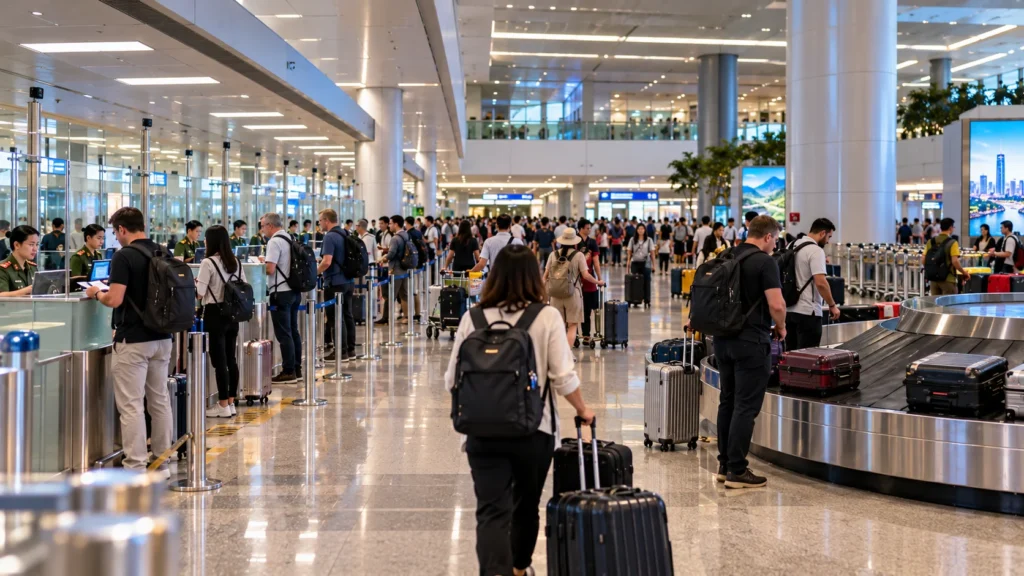
International arrivals at Ho Chi Minh City Airport normally follow a clear sequence: immigration, baggage collection, customs, then the public arrival hall. Keep your passport, visa or entry approval, hotel address, and onward booking easy to reach. If you need a local SIM or cash, compare the available counters before committing because prices and queues vary.
| Step | Simple advice |
| Immigration | Keep passport and required entry documents ready. |
| Baggage | Check the screen for your carousel and keep your bag tag. |
| Customs | Follow the green or red channel as applicable. |
| Arrival hall | Meet rides only at the agreed pillar or pickup zone. |
| Before leaving | Confirm your phone, cash, hotel address, and route. |
How to Reach the City from Ho Chi Minh City Airport
Ho Chi Minh City Airport is close to central districts, but the journey time depends heavily on traffic. Bus, taxi, app-based rides, and electric taxi services are available. For a first arrival, use a clearly marked pickup point and avoid accepting unsolicited offers inside the terminal. Your hotel can also tell you which entrance or landmark to use.
| Option | Best for | Important note |
| App ride | Clear price and cashless booking | Follow the app’s pickup instructions |
| Official taxi | Simple door-to-door travel | Use a marked rank and check the meter |
| Bus | Lower-cost city travel | Allow extra time and confirm the route |
| Hotel transfer | Late arrival or luggage | Reserve the vehicle and meeting point |
| Motorbike ride | Light luggage and experienced riders | Not ideal after a long international flight |
Terminal Transfers and Layovers
Transfers at Ho Chi Minh City Airport need more planning when you move between international and domestic terminals. T2 is not directly connected to T1 and T3. A free shuttle links the terminals, and the aviation authority lists service from early morning until after midnight. Because you may need immigration, bags, customs, a terminal transfer, and a fresh check-in, avoid a tight connection.
| Connection | Planning rule |
| International to international | Allow at least 90 minutes only when your ticket and bags are through. |
| International to domestic | Allow about 3 hours; you may need immigration, bags, customs, and check-in. |
| Domestic to international | Allow about 3 hours and verify the terminal before leaving the city. |
| T1, T2, T3 move | Use the free shuttle; allow 10–20 minutes plus waiting and walking. |
Useful Facilities and Things to Prepare
Ho Chi Minh City Airport has practical facilities such as ATMs, currency exchange, information desks, restaurants, shops, lounges, medical services, and telecommunications counters. At Ho Chi Minh City Airport, prepare a small arrival kit: a charged phone, offline hotel address, a translation app, a little local currency, and a screenshot of your flight and terminal. These small steps reduce stress when Wi-Fi or mobile data is slow.
Frequently Asked Questions
Tan Son Nhat International Airport, with the code SGN, is the main airport serving the city. Travelers searching for Ho Chi Minh City Airport are usually looking for Tan Son Nhat, which is near the central districts.
Terminal 2 handles international flights. T1 and T3 are domestic terminals, but always confirm the exact terminal with your airline because routes can change.
For an international flight, arriving around three hours before departure is a sensible starting point. Domestic travelers can often plan around two hours, with extra time during holidays, heavy rain, or peak traffic.
Yes. Ho Chi Minh City Airport provides a free landside shuttle between T1, T2, and T3. Service frequency and operating hours can change, so follow the latest airport signs and allow time to wait.
App-based rides are available, but pickup instructions matter. Follow the app’s designated area, match the vehicle and plate number, and never accept a ride from someone who approaches you without a confirmed booking.
Final Ho Chi Minh City Airport Tips
The smoothest Ho Chi Minh City Airport experience comes from checking your terminal before leaving, allowing generous connection time, and using a clear pickup point. At Ho Chi Minh City Airport, T2 handles international travel, while domestic flights may leave from T1 or T3. Save your hotel address offline, keep essential documents accessible, and check live flight information on the day.