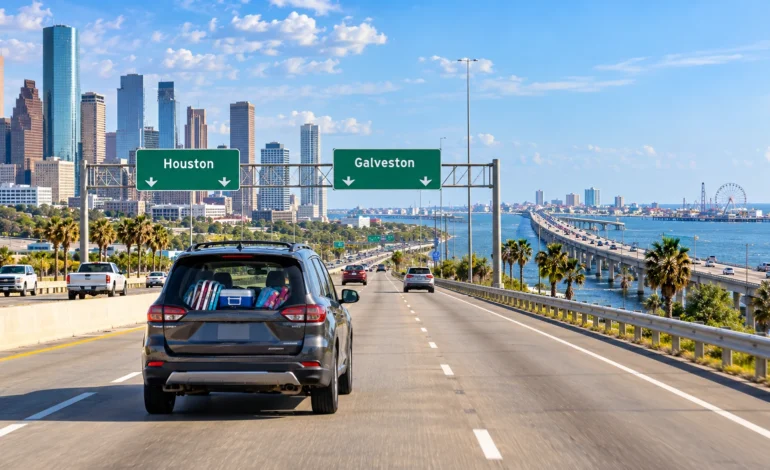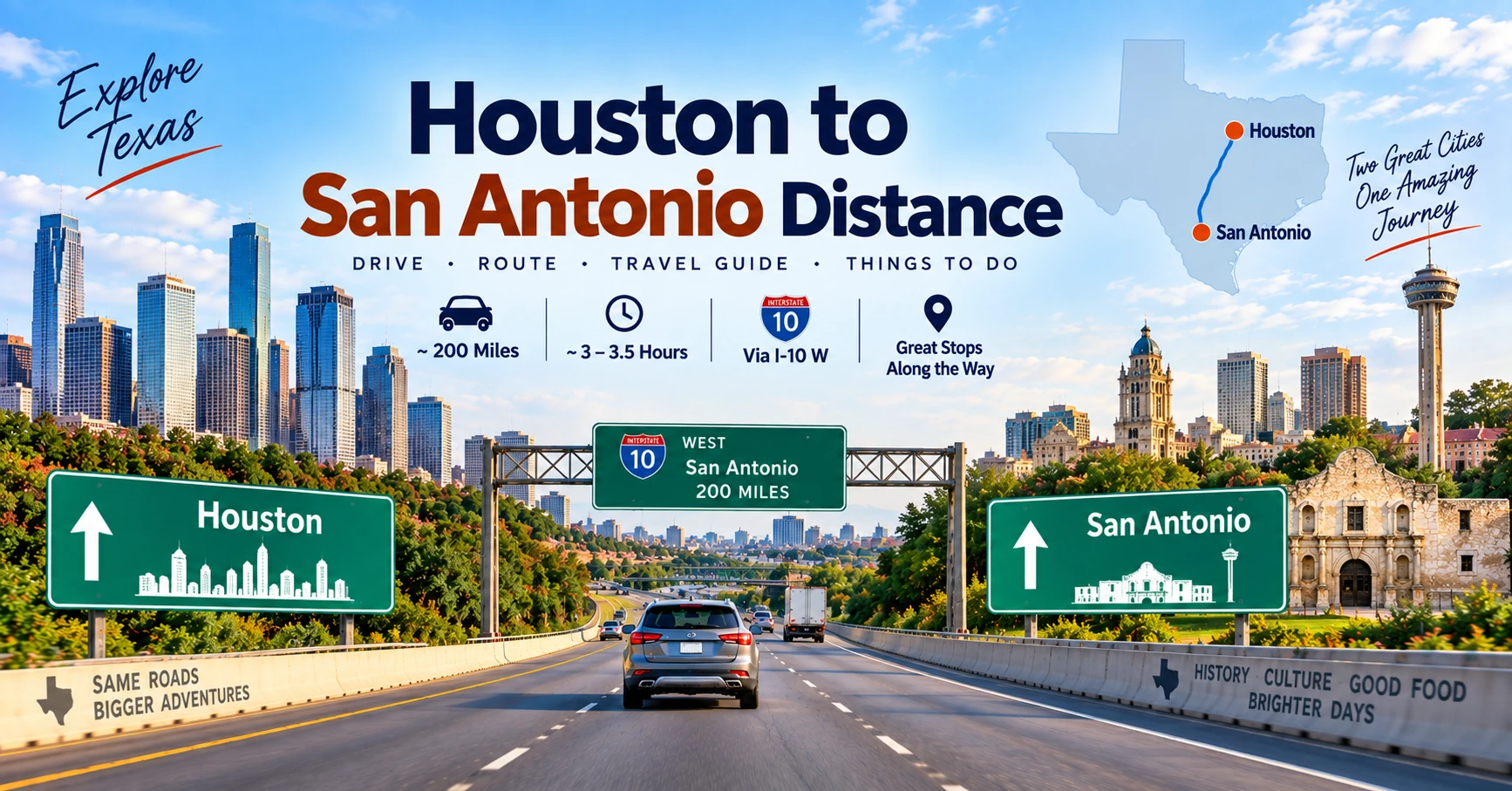

This isn’t a quick weekend trip. The Houston to El Paso distance runs about 740 to 745 miles, and driving it straight through takes roughly 11 hours — longer than any other major Texas city pair by a wide margin. If you’re planning this drive, here’s what to actually expect, from the route to the time zone change waiting at the finish line.
Quick Facts
| Detail | Information |
| Road Distance | 740–745 miles |
| Straight-Line Distance | 675 miles (1,086 km) |
| Driving Time | 10 hr 45 min to 11 hr 30 min |
| Flight Time | About 1 hr 45 min (gate to gate) |
| Bus Time | 12 to 13 hours |
| Train Time | About 19.5 hours (3 days a week) |
| Main Route | I-10 West |
| Airports | IAH / HOU (Houston), ELP (El Paso) |
The Route: One Highway, All Day
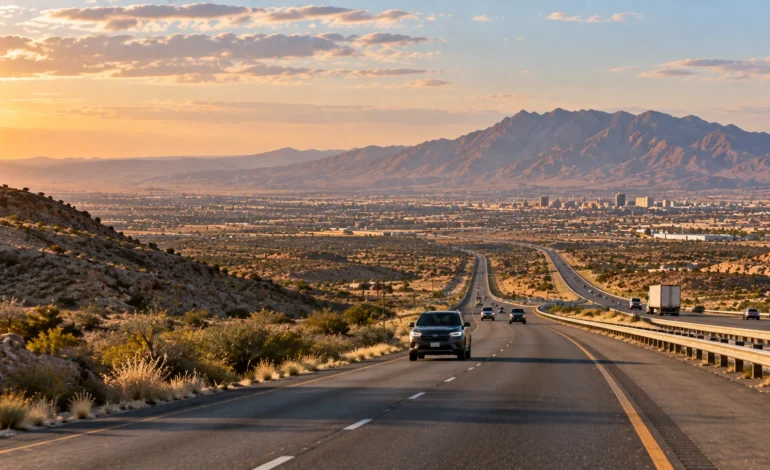
I-10 West is really the only sensible option for covering the Houston to El Paso distance by car. It runs almost the entire way, first passing through San Antonio, then stretching across some of the emptiest, most remote stretches of highway in the state before finally reaching El Paso near the New Mexico border.
This isn’t a route you casually knock out after work. Most people either commit to a single long driving day with several breaks, or split it into two days with an overnight stop somewhere in the middle.
Suggested Stops Along the Way
| Town | Distance from Houston | Notes |
| San Antonio | ~200 miles | Good early stop, food and fuel options |
| Fort Stockton | ~470 miles | Roughly the halfway point, common overnight stop |
| Van Horn | ~625 miles | Last major stop before El Paso |
Fort Stockton sits close enough to the midpoint that it’s the most common overnight break for anyone splitting this drive into two days. Van Horn, further along, works well as a final stop if you’re pushing through in one day and just need a last stretch break before the final push into El Paso.
One-Day vs Two-Day: Which Should You Pick
| Approach | Total Time | Best For |
| One-day push | 10 hr 45 min–11 hr 30 min driving | Experienced long-distance drivers, tight schedules |
| Two-day split (overnight in Fort Stockton) | 5–6 hours per day | More comfortable pace, less driver fatigue |
Doing the entire Houston to El Paso distance in a single day is doable, but it’s a genuinely long haul, especially through the featureless stretches west of San Antonio. Splitting it into two shorter days with an overnight in Fort Stockton makes for a noticeably easier trip, particularly if you’re driving alone.
Don’t Forget the Time Zone Change
Here’s something that catches people off guard: El Paso runs on Mountain Time, while Houston is on Central Time. Driving west, you’ll actually gain an hour once you cross into Mountain Time near Van Horn, which can throw off arrival time estimates if you’re not accounting for it. It’s a small detail, but worth remembering when you’re telling someone what time to expect you.
Gas Stations Along the Way
Fuel stops are less frequent than you might expect once you’re past Fort Stockton, since this stretch of Texas is genuinely remote. It’s worth filling up in San Antonio, again in Fort Stockton, and once more in Van Horn rather than letting your tank run low between towns — some stretches out here go 60 to 80 miles between reliable gas stations.
Flying and Other Options
Flying covers the Houston to El Paso distance in about 1 hour 45 minutes gate to gate, which is dramatically faster than driving and worth serious consideration if you don’t specifically need a car once you arrive. Multiple daily flights connect Houston’s airports to El Paso International.
Bus service takes 12 to 13 hours, similar to driving once you factor in stops. Amtrak also runs a direct train three times a week, though at roughly 19.5 hours, it’s the slowest option by far and really only makes sense if you’re set on rail travel specifically.
Cost Comparison
| Option | Typical Cost (one way) | Time | Best For |
| Driving | Gas, roughly $90–$130 | ~11 hours | Flexibility, road trip experience |
| Flying | $150–$350+ | ~1 hr 45 min in air | Time savings, no driver fatigue |
| Bus | $120–$270 | 12–13 hours | Budget travel |
| Train | $100–$270 | ~19.5 hours | Scenic, unhurried travel |
For a distance this long, flying often makes more practical sense than driving unless the road trip itself is part of the appeal.
Why People Make This Long Drive
Business travel connects these two ends of Texas more than you’d expect, given how much economic activity happens on both sides of the state. Military families also make this trip regularly, since El Paso is home to Fort Bliss, one of the largest Army installations in the country. Add in students, relocating families, and travelers who genuinely enjoy the open-road experience through West Texas, and this long stretch sees steady traffic despite its length.
Knowing the real Houston to El Paso distance, and planning around it properly, makes the difference between a manageable trip and an exhausting one. Whether that means splitting the drive into two days, budgeting for flights instead, or simply knowing where the reliable gas stations are, a little planning goes a long way on a drive this long.
Quick Answers
How far is El Paso from Houston? About 740 to 745 miles by road.
How long does the drive take? Roughly 10 hours 45 minutes to 11 hours 30 minutes non-stop.
Should I drive it in one day or two? Two days is more comfortable for most people, with Fort Stockton as a natural overnight stop.
Is there a time zone change? Yes — El Paso is on Mountain Time, one hour behind Houston’s Central Time.
Is flying faster than driving? Yes, significantly — about 1 hour 45 minutes in the air versus 11 hours on the road.
Before You Head Out
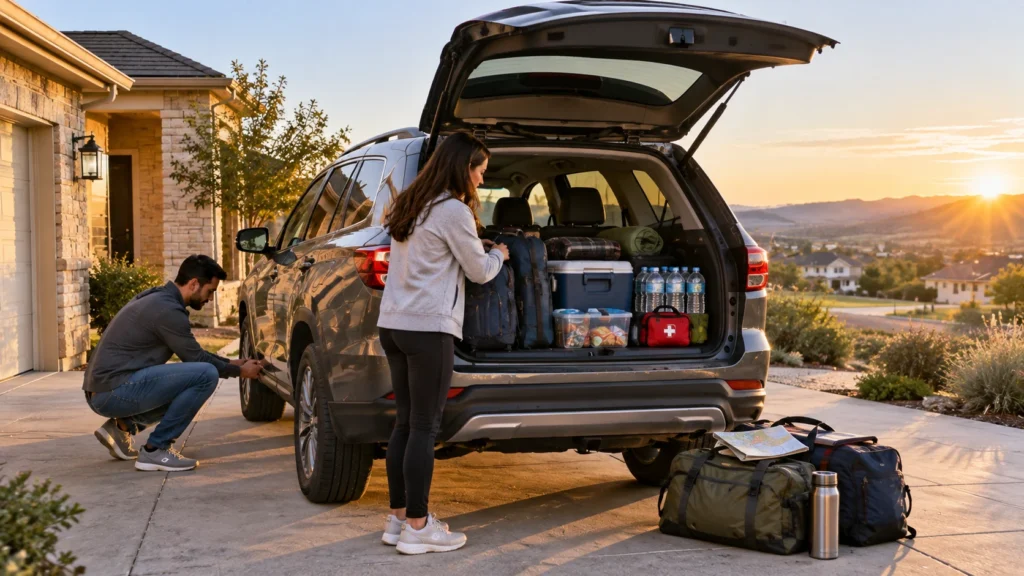
Plan your fuel stops in advance, since gas stations thin out west of Fort Stockton. Pack extra water and snacks given how remote parts of this drive get, and check your vehicle’s condition beforehand, since a breakdown in the emptier stretches of West Texas can mean a long wait for help. If you’re splitting the drive over two days, book your Fort Stockton stop ahead of time during peak travel seasons.
For live traffic conditions and current route details, it’s worth checking the official website before you leave.