Yellowstone to Glacier National Park: Distance, Routes, and How Long It Actually Takes

I get asked about the drive from Yellowstone to Glacier National Park more than almost any other Montana road trip question, and it makes sense why. Both parks sit in the same state, both are bucket-list stops, and pairing them into one trip feels like it should be simple. It mostly is, but the distance and drive time shift more than people expect depending on which entrance you use at each end, so here’s the real breakdown.
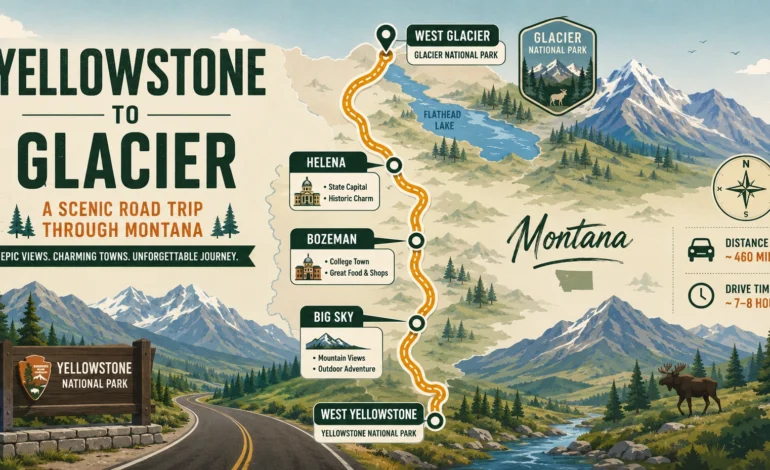
The honest answer is “it depends,” but not by a huge margin. Depending on which gates you use, the drive from Yellowstone to Glacier National Park runs somewhere between 370 and 440 miles, translating to roughly 6 to 8 hours behind the wheel without stops.
| Starting Point | Ending Point | Distance | Drive Time |
|---|---|---|---|
| West Yellowstone | West Glacier | ~380 miles | 6.5–7 hours |
| Gardiner (North Entrance) | St. Mary (East Entrance) | ~360–440 miles | 7–8 hours |
| Bozeman | West Glacier | ~280 miles | 5 hours |
| West Yellowstone | St. Mary | ~400 miles | 7–7.5 hours |
Bozeman shows up in that table because a lot of travelers actually start there rather than right at a Yellowstone gate, especially if they’ve flown into Bozeman Yellowstone International Airport to begin the trip.
The Fastest, Most Scenic Route
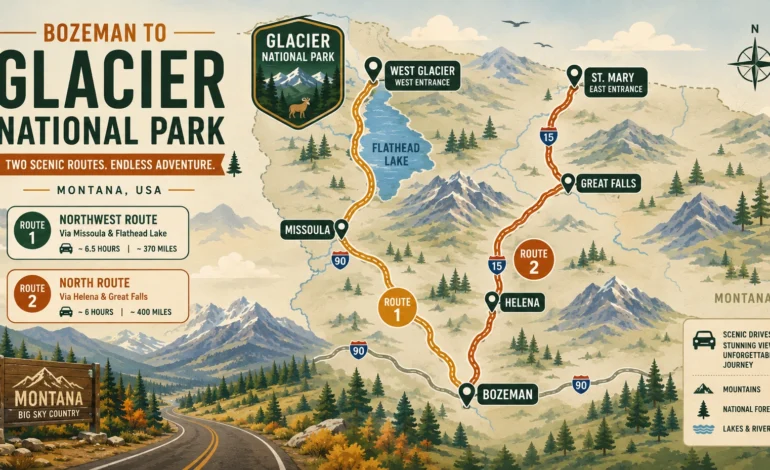
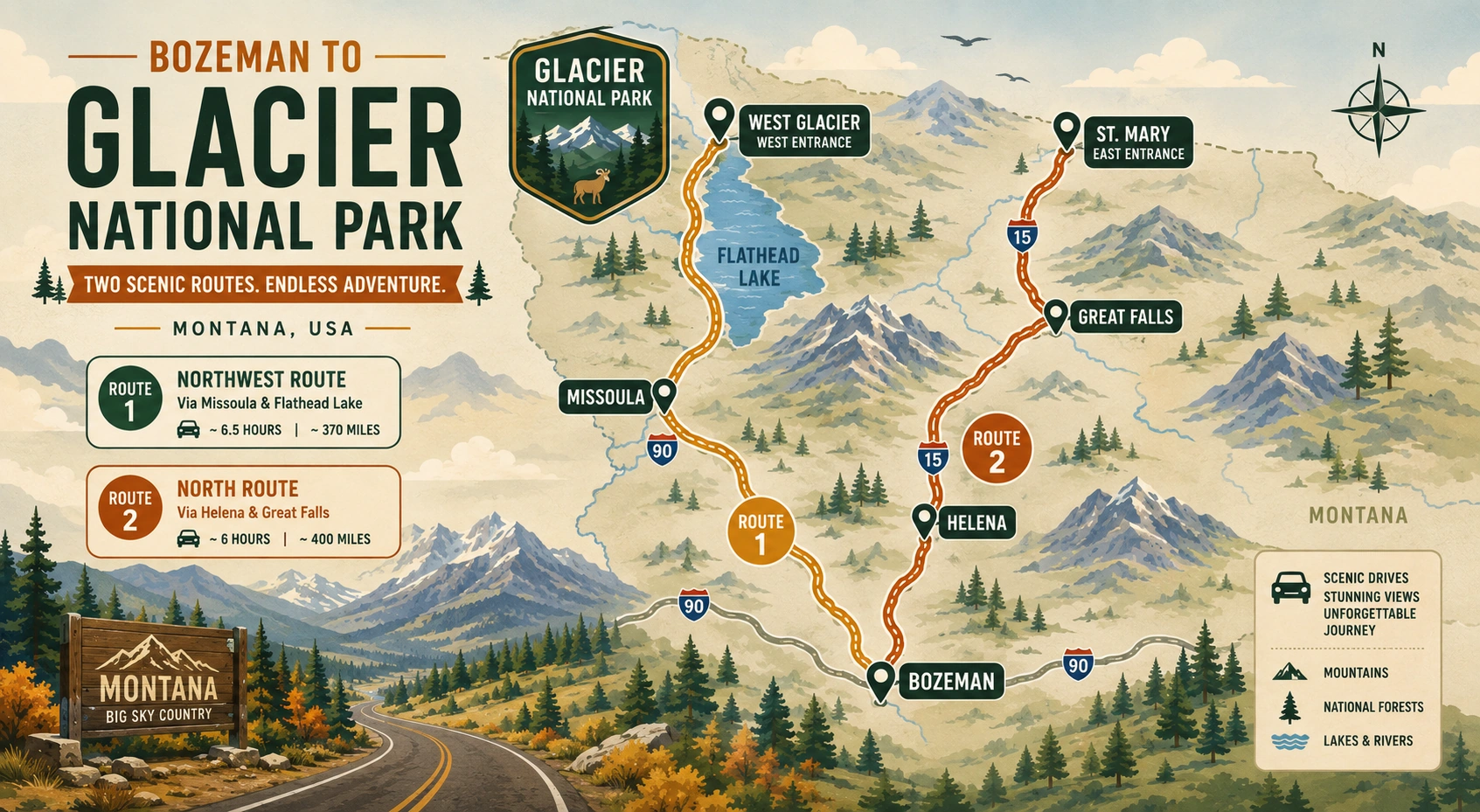
If you’re heading from West Yellowstone to West Glacier, the US-287 North to US-89 North corridor is the route almost everyone ends up recommending, and for good reason. It runs fairly direct, has reliable cell service for most of the drive, and passes through open ranch country before the mountains start rising again near Glacier. This is the route to take if getting there efficiently matters more than maximizing scenic detours.
The Slower Route Through Helena
An alternative path runs through Helena, Montana’s capital, before continuing north past Seeley Lake and Flathead Lake toward West Glacier. This adds some driving time compared to the direct corridor, but it breaks the trip into two comfortable legs, with Helena sitting almost exactly at the midpoint. It’s a solid option if you’d rather split an 8-hour drive into two shorter days instead of pushing through in one long haul.
Worth Doing in One Day, or Not
Technically, yes, you can drive from Yellowstone to Glacier National Park in a single day. Realistically, I wouldn’t recommend it unless you have no other choice. Seven to eight hours of driving after you’ve already spent days exploring Yellowstone tends to leave people exhausted right as they arrive somewhere they should be excited to explore. Splitting the drive across two days, with an overnight stop roughly at the midpoint, makes both ends of the trip feel less rushed.
Good Stops to Break Up the Drive
A few towns along the way are worth more than a bathroom break, especially if you’re not in a hurry.
| Stop | Along Which Route | Why Stop Here |
|---|---|---|
| Bozeman | Either route | Airport access, restaurants, mountain-town atmosphere |
| Big Sky | US-287 corridor | Scenic detour, good lunch stop |
| Helena | Helena route | Historic downtown, natural midpoint for an overnight |
| Flathead Lake | Helena route (northern leg) | Largest freshwater lake in the western US, lakeside dining |
| Missoula | Western/Helena route | University town, breweries, easy detour off US-93 |
Flathead Lake in particular is a nice payoff near the end of the Helena route, since it sits close enough to Glacier that you’re basically already there once you reach its shores.
When to Make This Drive
Late June through early September is the window where this trip works best end to end, mainly because that’s when Going-to-the-Sun Road inside Glacier is fully open and most Yellowstone facilities are running at full capacity too. If you’re set on driving the Beartooth Highway as part of the journey instead of the standard route, keep in mind it only opens from late June to early October, so shoulder-season trips can miss that option entirely depending on snowpack.
What to Plan For on the Drive
A few practical details matter more on this route than people expect, mostly because parts of it run through genuinely remote country.
| Consideration | What to Know |
|---|---|
| Gas stations | Fill up in Bozeman, Helena, or Missoula; stretches in between can run 60+ miles without a station |
| Cell service | Spotty to nonexistent through open ranch country and mountain passes |
| Wildlife on the road | Deer and elk crossings increase at dawn and dusk, especially near Big Sky |
| Winter driving | Snow can appear as early as October and as late as May at higher elevations |
| Rental car one-way fees | Often cheaper to fly into one park’s airport and out of the other than to return a car to its origin |
Filling the tank whenever you pass through a town, rather than waiting until the gauge runs low, avoids an unpleasant surprise on the quieter stretches of highway.
Where to Stay for the Night
If you’re splitting the drive into two days, picking the right overnight stop matters almost as much as the route itself. Bozeman works well if you’re taking the direct US-287/89 corridor, since it sits close to the start of the drive and has plenty of hotel options. Helena serves the same purpose on the alternate route, landing you almost exactly halfway with a walkable historic downtown to stretch your legs in after hours in the car. Missoula is a strong third option if you’ve chosen the western leg through Flathead Lake, offering a lively college-town atmosphere and easy access back onto US-93 the next morning.
What to Pack for This Drive
A road trip through this part of Montana rewards a bit of preparation, since services thin out considerably once you’re between towns.
| Item | Why It Helps |
|---|---|
| Paper map or downloaded offline map | Cell signal drops for long stretches |
| Extra water and snacks | Gas stations can be 60+ miles apart in places |
| Bear spray | Useful once you’re hiking in either park, not needed for the drive itself |
| Layers | Temperatures swing widely between valley floors and mountain passes |
| Full tank of gas at every fill-up opportunity | Running low between towns is a real risk on the quieter stretches |
Frequently Asked Questions
The West Yellowstone to West Glacier drive via US-287 and US-89 is generally the shortest and most direct option, at around 380 miles and 6.5 to 7 hours.
There’s no direct commercial flight between them. Most travelers fly into Bozeman for Yellowstone and out of Glacier Park International Airport near Kalispell, or vice versa, and drive the stretch in between.
Yes, and it’s one of the better multi-park drives in the country. You pass through genuine Montana ranch country and mountain towns rather than empty interstate, and stops like Flathead Lake or Helena make the miles feel purposeful instead of like filler between destinations.