Newark to Princeton Distance: Miles, Route and Travel Time

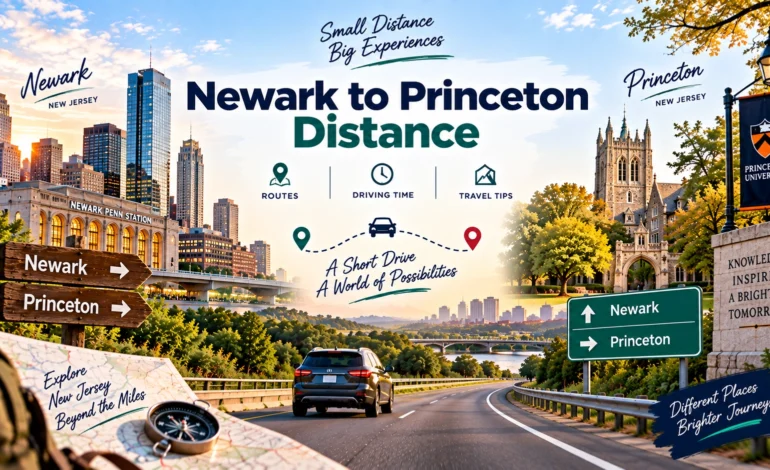
Short version first: the Newark to Princeton distance is about 40 to 42 miles, and you’re looking at under an hour to get there, whether you drive or hop on a train. That’s genuinely good news if you’re used to New Jersey traffic testing your patience. Here’s everything else worth knowing before you go.
The Numbers You Actually Came For
Forty miles doesn’t sound like much, and honestly, it isn’t. The Newark to Princeton distance is one of the shorter city-to-city trips in New Jersey, which is a nice change of pace if you’re used to sitting in traffic for hours just to cross the state. Driving distance lands around 40 to 42 miles depending on your exact starting point in Newark, and the straight-line distance sits close to that same number since the route runs fairly direct.
| Detail | Information |
|---|---|
| Road Distance | 40–42 miles |
| Straight-Line Distance | 39 miles (63 km) |
| Driving Time | 50 min to 1 hr |
| Train Time | 55 min to 1 hr 20 min |
| Main Route | NJ Turnpike South to Route 1 South |
| Nearest Airport | Newark Liberty International (EWR) |
Car or Train? Honestly, It’s a Toss-Up
Here’s what makes this trip a little different from most: driving and taking the train end up costing you roughly the same amount of time. NJ Transit runs trains from Newark Penn Station to Princeton Junction fairly often, and the ride itself takes about 55 minutes. From there it’s a short hop into Princeton proper.
Driving takes around 50 minutes to an hour without traffic, using the NJ Turnpike south before switching onto Route 1. So which one should you pick? If you hate parking hassles or just want to sit back and scroll your phone, the train wins. If you need a car once you’re in Princeton, or you’re traveling with a lot of stuff, driving makes more sense. Neither one is the “wrong” choice here, which honestly doesn’t happen often when comparing driving versus train travel.
Getting There by Car
Most drivers take the NJ Turnpike south out of Newark before merging onto Route 1 South for the final stretch into Princeton. It’s a straightforward drive with no confusing turns, which is more than you can say for a lot of New Jersey routes. Traffic is really the only wildcard here — the Turnpike can bog down during rush hour, especially in the late afternoon when everyone’s heading south out of the Newark and Elizabeth area at once.
Outside of peak hours, the Newark to Princeton distance covers in a genuinely quick 50 minutes. Add rush hour into the mix and you might be looking at closer to 75 or 80 minutes instead, so timing your drive matters more here than the actual mileage does.
That said, once you’re past the Elizabeth stretch and onto the open part of the Turnpike, the drive smooths out fast. Route 1 near Princeton can get a little congested closer to the university, especially during the school year, but it’s nothing compared to fighting through central Jersey during a Friday evening commute.
What Slows You Down
Rush hour is the big one, no surprise there. Weekday mornings between 7 and 9 AM and afternoons from 4 to 6:30 PM tend to be the roughest stretches on the Turnpike. Weather isn’t usually a major factor on this route since it stays relatively flat and short, though heavy rain can still slow things down near the Route 1 corridor where traffic tends to bunch up around university move-in weekends and graduation season.
Tolls are worth mentioning too. The NJ Turnpike isn’t free, so budget a few dollars each way if you’re driving instead of training it in.
Skipping the Car Entirely
If driving isn’t your thing, the train genuinely holds up as a solid option here, which isn’t always true for shorter routes like this. NJ Transit’s Northeast Corridor Line connects Newark Penn Station to Princeton Junction, and from there a short shuttle train, locally called the “Dinky,” takes you the rest of the way into Princeton itself. Total travel time usually falls between 55 minutes and an hour and 20 minutes depending on connections.
Rideshare is another option, though a 40-mile Uber or Lyft ride in New Jersey isn’t cheap. Between tolls, distance, and demand pricing, expect to pay noticeably more than you would for the train — often two or three times as much for covering the same Newark to Princeton distance.
What You’ll Actually Spend
Gas costs stay low on a trip this short, so driving is usually the cheaper option once you factor in the Turnpike toll. A one-way train ticket typically costs less than a full tank of gas would, making it a solid budget pick if you’re traveling solo and don’t need a car once you arrive. Rideshare is the priciest option by a decent margin, mostly useful if you’re in a hurry and money isn’t the main concern.
None of these options make a huge dent in your wallet either way, which is one of the perks of the Newark to Princeton distance being as short as it is. Compare that to a trip covering twice the mileage and the cost difference between driving, training, and rideshare becomes a lot more noticeable.
Why This Route Gets Searched So Much
A good chunk of it comes down to Princeton University. Students, parents, and visiting faculty regularly make this trip, especially around the start and end of semesters. Add in people commuting for work between the two cities, since both sit within reasonable range of New York City’s job market, and you’ve got a route that stays busy year-round rather than just during obvious travel seasons. Business travelers connecting through Newark Liberty add another steady stream of people covering the Newark to Princeton distance on any given weekday.
Knowing the real Newark to Princeton distance and your travel options ahead of time makes a real difference here, especially if you’re timing a flight connection through Newark Liberty or trying to catch a specific train.
Quick Answers
About 40 to 42 miles by road.
Roughly 50 minutes to an hour without traffic.
They’re close — the train usually takes 55 minutes to about an hour 20 minutes including connections.
NJ Turnpike South to Route 1 South.
Yes, on the NJ Turnpike portion of the drive.
If you’re flying into Newark Liberty and connecting on to Princeton, build in extra time for rush hour if you’re driving, or check the train schedule ahead of time since it doesn’t run every few minutes outside peak hours. Cell coverage and GPS stay reliable the entire way, so navigation shouldn’t be an issue either way you choose to travel.
For live traffic conditions, train schedules, or the latest route details, it’s worth checking the official website before you leave.